
 EN
EN



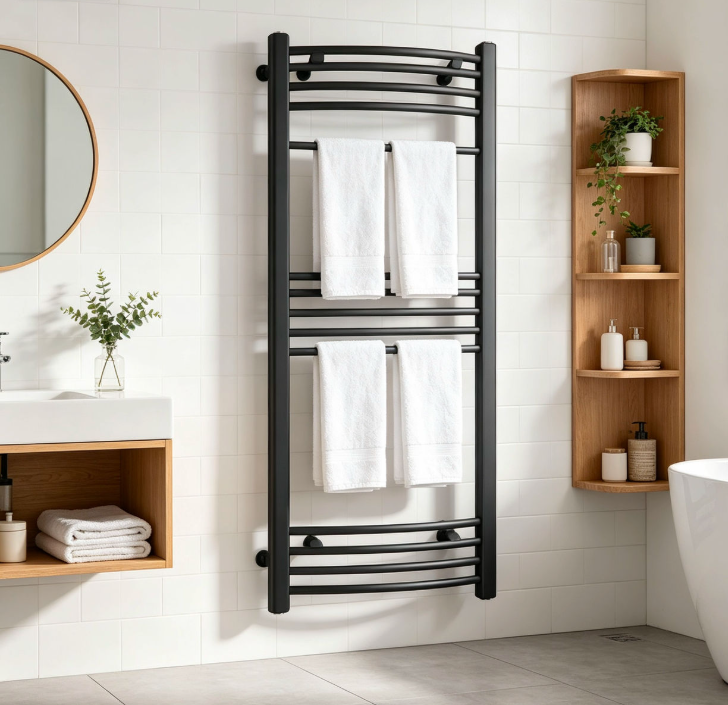
If you’ve spent any time researching towel warmers, you’ve probably noticed that the market splits into two distinct camps: the classic heated rack, and the increasingly popular bucket-style warmer. Both promise the same thing—a warm, dry towel when you step out of the shower—but they go about it in very different ways.
So which one actually makes more sense for your home? We dug into real user experiences from Reddit, Amazon reviews, and expert testing to bring you an honest comparison.
How Each Style Works (and Why It Matters)
Heated Racks: The Traditional Approach
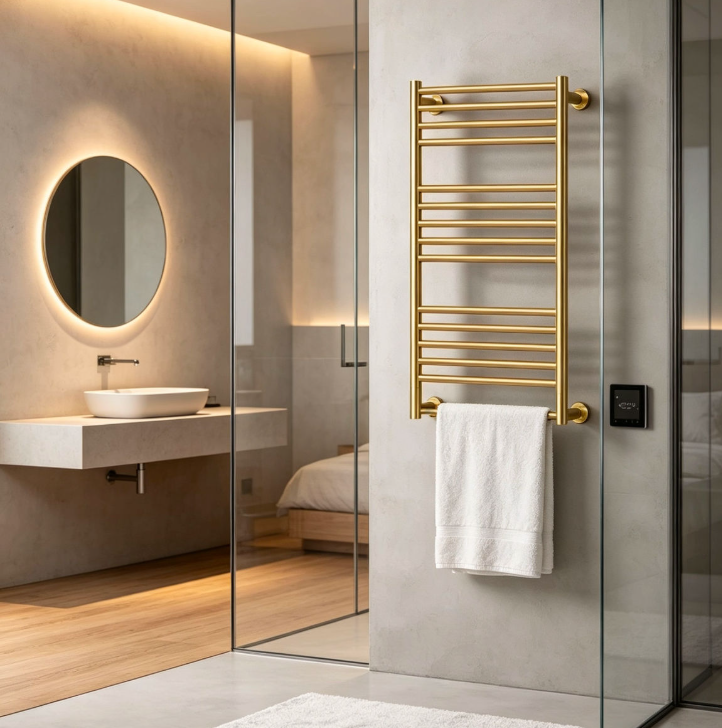
Heated towel racks—sometimes called rails or ladders—are the style you’ve seen in hotel bathrooms for decades. They consist of metal bars that heat up, and you drape your towel over them. The heat transfers to the towel through direct contact with those bars .
The appeal is obvious: they’re space-efficient (especially wall-mounted models), they look sleek, and they can handle multiple towels at once. A good rack with widely spaced bars can warm three or four towels simultaneously .
But there’s a catch that users consistently mention. Because only the parts of the towel touching the bars get heated, you often end up with “cold spots” where the fabric wasn’t in direct contact. One Amazon reviewer of a wall-mounted rack put it bluntly: “There didn’t seem to be much difference even when a completely dry towel is warmed for an hour at maximum temperature” .
Bucket Warmers: The Enclosed Chamber
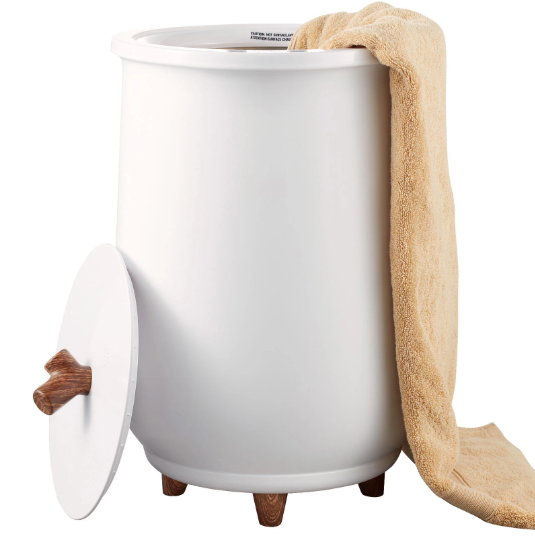
Bucket-style warmers work differently. Instead of hanging your towel, you fold it and place it inside an enclosed, insulated chamber. The entire interior heats up, so the towel gets warmed from all sides—not just where it touches a bar .
This design has a significant advantage: even heating. A Good Housekeeping test of a popular bucket model found that towels reached 115°F (46°C) in just 15 minutes with “even heat among both towels” . Multiple Amazon reviewers echoed this, with one noting they were “surprised to see that the heat was completely even on all fabrics” .
Buckets also stay warmer longer because the lid traps heat inside. As House Digest noted, once you remove a towel from a rack, it starts cooling almost immediately—whereas a bucket keeps everything hot until you open it .
What Reddit Users Are Saying
Reddit threads on r/HomeImprovement, r/BuyItForLife, and r/Plumbing reveal some consistent patterns in how real owners feel about each style.
The “warmth quality” debate. A recurring theme among Reddit users is that bucket-style warmers simply deliver a more intense, satisfying warmth. One user who owns both styles wrote that the bucket “actually makes towels hot, not just slightly less cold.” Several others agreed, noting that racks often disappoint in this regard—especially if you don’t drape the towel perfectly.
The “guest bathroom” use case. A surprising number of Reddit commenters mention using bucket warmers specifically for guest bathrooms. The reasoning: “I’m not going to hardwire a rack for a room that gets used three times a year. The bucket just plugs in and I can store it when not needed.” This portability is a genuine advantage that rack owners don’t get.
The “aesthetic” complaint. Here’s where racks win in Reddit discussions. Many users say they’d prefer the look of a sleek wall-mounted rack but chose a bucket anyway because “it actually works.” One highly upvoted comment captured the sentiment perfectly: “I wanted the pretty rack. I bought the ugly bucket. I don’t regret it.”
The “safety with kids” concern. Multiple Reddit parents noted that exposed hot metal bars on racks made them nervous with toddlers around. Buckets, which have insulated exteriors and stay relatively cool to the touch, were seen as the safer option .
The Practical Trade-Offs
Space and Installation
This is where the two styles diverge dramatically.
Racks can be wall-mounted (space-efficient but requires drilling, and often an electrician for hardwired models) or freestanding (easier to install but takes up floor space). A plug-in rack is a middle ground, but you still need a nearby outlet .
Buckets are freestanding by nature. They sit on the floor or a counter, plug into any standard outlet, and require zero installation . The trade-off is floor space—buckets are bulky, and you need room to open the lid and load towels.
Capacity and Versatility
Racks win on raw capacity for hanging items. A large rack can hold multiple towels and even a bathrobe draped over the bars .
Buckets win on what you can warm. Because they’re enclosed, you can toss in not just towels but also pajamas, socks, underwear, and even small blankets . A 25-liter bucket can fit five large towels or a robe and several beach towels . One Amazon reviewer who uses theirs by the hot tub noted: “Can fit a robe and multiple beach towels at one time. Towels come out warm and fluffy” .
Safety
Buckets have a clear edge here. The exterior stays cool, and most models include auto-shutoff timers and sometimes child locks . Racks have exposed hot metal bars that can cause burns if you bump into them—a genuine concern for households with small children or pets .
One Amazon reviewer of a bucket warmer did note that the interior gets “VERY hot quick,” so you still need to be careful when reaching in . But the exterior safety profile is much friendlier than an exposed rack.
Which Should You Choose?
The honest answer is: it depends on your priorities.
Choose a rack if:
You want a permanent, design-forward fixture that looks built-in
You have limited floor space
You mainly warm towels (not clothing or blankets)
You’re okay with hanging towels carefully to maximize contact with the bars
You have a bathroom that gets daily use and you’re willing to turn it on well before showering
Choose a bucket if:
You want consistent, even warmth without fiddling with towel placement
You want to warm robes, pajamas, or blankets—not just towels
You value portability (moving it between bathrooms, or storing it when not in use)
You have children or pets and want a safer option
One practical note from user reviews: if you go with a rack, turn it on at least 20-30 minutes before you shower. If you go with a bucket, 10-15 minutes is usually enough . That timing difference reflects the fundamental design trade-off—enclosed chambers heat faster and more evenly, but open racks can accommodate more items in less floor space.
FAQ
Can I install a heated towel rack myself?
Plug-in models can be DIY-installed if there’s an outlet nearby. Hardwired models require a licensed electrician and should comply with local bathroom wiring regulations .
Do bucket warmers use a lot of electricity?
Most consume between 60 and 200 watts—comparable to a few light bulbs. Running costs are typically a few cents per day depending on usage and local electricity rates .
Will a towel warmer help with bathroom mold?
Yes. By drying towels thoroughly between uses, a towel warmer reduces the damp conditions where mold and mildew thrive. This benefit applies to both racks and buckets .
How many towels can a bucket hold?
It varies by model, but a 20-25 liter bucket typically fits 4-6 large bath towels, or a robe plus several smaller items. The more you put in, the longer it takes to heat through .
Which style do hotels use?
High-end hotels overwhelmingly use racks—partly for the design aesthetic, and partly because racks can be hardwired discreetly into the wall. But some spas and wellness centers are adopting bucket-style warmers for their even heating and ability to warm robes .