
 EN
EN



Choosing the correct PEX fitting is one of the most critical decisions in any plumbing project. A PEX fitting determines how water flows through your system, how leak-resistant your connections are, and how long the entire installation will last. Whether you are working on a residential water supply line, a radiant heating system, or a commercial plumbing layout, selecting the right PEX fitting from the start saves time, money, and significant rework later.
The market offers a wide range of PEX fitting options, and the variety can feel overwhelming for both new installers and experienced contractors. Each PEX fitting type serves specific conditions, pressure ratings, and pipe compatibility requirements. Understanding the key selection criteria allows you to match the right PEX fitting to your project's exact demands without guesswork or costly trial and error.
Understanding PEX Fitting Types and Their Applications
Crimp and Clamp PEX Fittings
The crimp PEX fitting is among the most widely used connection styles in residential plumbing. It uses a copper or stainless steel ring that is compressed over the PEX pipe and fitting body using a crimp tool. A crimp PEX fitting creates a tight, durable seal that performs reliably under standard water pressure conditions. This type of PEX fitting is cost-effective and compatible with PEX-A, PEX-B, and PEX-C pipe types, making it a versatile choice across many project types.
The clamp PEX fitting, also called a cinch PEX fitting, works on a similar principle but uses a stainless steel clamp instead of a ring. A clamp PEX fitting is often easier to install in tight spaces because the clamp tool operates from one side. Both crimp and clamp styles deliver strong, leak-resistant joints when installed correctly, and choosing between them typically comes down to the installer's available tools and personal preference.
Expansion and Push-Fit PEX Fittings
The expansion PEX fitting, compatible primarily with PEX-A pipe, uses an expansion tool to widen the pipe end before inserting the fitting. As the pipe contracts back to its original size, it grips the PEX fitting with exceptional force. This style of PEX fitting produces some of the strongest connections available and is particularly favored for systems that require high reliability, such as in-floor radiant heating or commercial water distribution.
The push-fit PEX fitting, sometimes called a push-to-connect PEX fitting, requires no tools and no special rings or clamps. You simply push the pipe end into the PEX fitting body, and internal gripping teeth lock the pipe in place. A push-fit PEX fitting is ideal for quick repairs, tight access areas, or situations where multiple connections need to be made rapidly. While a push-fit PEX fitting is highly convenient, always verify its pressure rating matches your system requirements before installation.
Key Factors to Evaluate When Selecting a PEX Fitting
Material Compatibility and Corrosion Resistance
PEX fitting bodies are manufactured from brass, poly alloy, or stainless steel, and each material suits different environments. A brass PEX fitting is the most common choice for potable water systems because it offers excellent corrosion resistance and long service life. However, in areas with highly acidic water, a poly alloy PEX fitting may perform better since it avoids metal corrosion entirely. Matching the PEX fitting material to your water chemistry prevents premature degradation and costly leaks down the line.
In environments where dezincification is a known issue, always select a PEX fitting specifically rated as dezincification-resistant. This is a common requirement in certain regions where local codes mandate the use of DZR-grade brass for any PEX fitting used in potable water applications. Reviewing local plumbing codes before purchasing any PEX fitting ensures compliance and avoids failed inspections.
Sizing and Flow Rate Considerations
Selecting the correct diameter PEX fitting is essential to maintaining adequate water pressure and flow throughout your system. A PEX fitting that is too small creates a flow restriction, leading to pressure drops that affect fixture performance. Standard PEX fitting sizes include half-inch, three-quarter-inch, and one-inch diameters, each suitable for different demand levels. Supply branch lines typically use a half-inch PEX fitting, while main distribution lines benefit from a three-quarter-inch or larger PEX fitting.
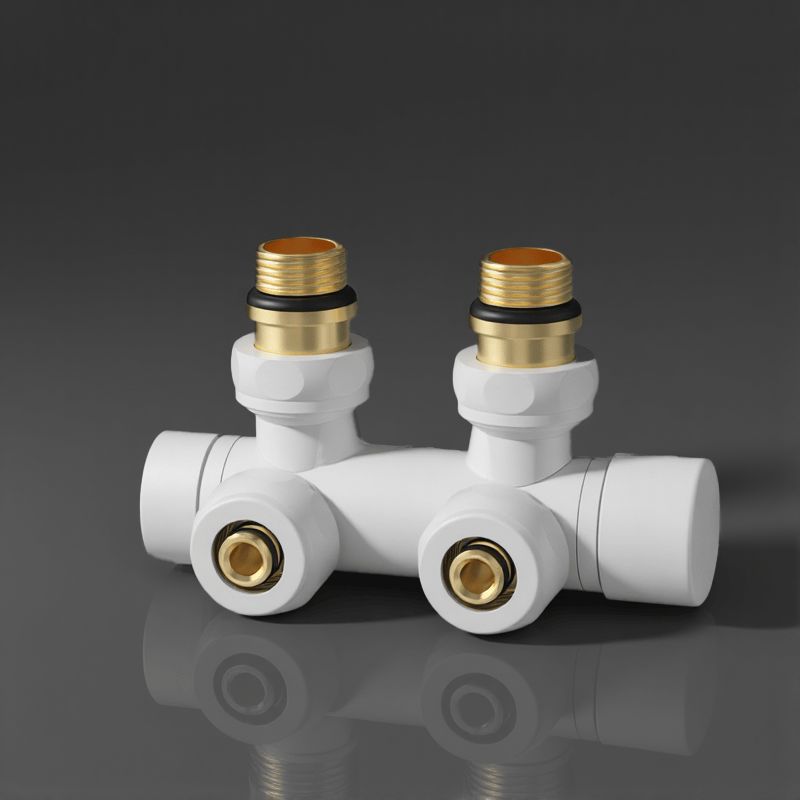
When designing a manifold-based distribution system, pair each branch with the appropriately sized PEX fitting to balance flow across all outlets. A manifold system with correctly matched PEX fitting connections eliminates pressure imbalances and ensures every fixture receives consistent water delivery. This approach is especially valuable in multi-bathroom homes or commercial facilities where demand varies significantly across zones.
Matching PEX Fitting Selection to Project Type
Residential Plumbing Projects
For most residential plumbing projects, a crimp or clamp PEX fitting offers the best balance of cost, availability, and ease of installation. A standard brass crimp PEX fitting handles the typical pressure and temperature ranges found in home water supply systems without issue. When working on a home renovation where pipe access is limited, a push-fit PEX fitting speeds up the connection process significantly and reduces the need for specialized tools on-site.
For radiant floor heating in a residential setting, the expansion PEX fitting is strongly preferred because the thermal cycling in heating systems demands the highest joint integrity. Choosing the wrong PEX fitting for a radiant system can lead to joint failure over time due to repeated expansion and contraction of the pipe. Matching your PEX fitting type to the specific thermal and pressure demands of the application is a non-negotiable step in the selection process.
Commercial and Industrial Plumbing Projects
Commercial projects often demand a PEX fitting with higher pressure ratings, larger diameters, and greater corrosion resistance. An industrial-grade brass or stainless steel PEX fitting meets these elevated performance standards and complies with commercial plumbing codes. In larger commercial systems, the manifold layout with zone-specific PEX fitting connections provides the control and flexibility needed to manage complex water distribution networks efficiently.
Always verify that the PEX fitting you select carries relevant certifications such as NSF 61 for potable water safety or ASTM standards for dimensional accuracy. A certified PEX fitting ensures that your installation meets quality benchmarks and protects building occupants from contamination risks. Selecting a PEX fitting without proper certification is a risk no professional contractor should take on any commercial project.
FAQ
Can I use the same PEX fitting for both hot and cold water lines?
Yes, most standard PEX fitting products are rated for both hot and cold water applications. Always check the manufacturer's temperature and pressure ratings for the specific PEX fitting before installation. A quality brass PEX fitting typically handles temperatures up to 200 degrees Fahrenheit, making it suitable for both supply lines.
How do I know which size PEX fitting to choose?
The correct PEX fitting size depends on your pipe diameter and the required flow rate for the application. Match the PEX fitting diameter directly to the pipe size used in your system. For main lines, a three-quarter-inch PEX fitting is common, while branch lines typically use a half-inch PEX fitting.
Is a push-fit PEX fitting as reliable as a crimp PEX fitting?
A push-fit PEX fitting is reliable for low-to-medium pressure applications when installed correctly. For high-pressure systems or permanent installations behind walls, a crimp PEX fitting or expansion PEX fitting generally provides a more robust long-term connection. Always verify the pressure rating of any PEX fitting before making your final selection.