
 EN
EN



When evaluating plumbing materials for residential or commercial projects, durability is one of the most critical factors. PEX fittings have become a widely discussed option among contractors and engineers, largely because of their impressive resistance to common plumbing failures. Understanding exactly how durable PEX fittings are — and how they compare to copper, CPVC, and galvanized steel alternatives — helps professionals make informed procurement decisions.
PEX fittings are designed to handle demanding operating conditions across decades of service. Their cross-linked polyethylene construction gives them a unique molecular structure that resists cracking, corrosion, and scale buildup — three of the most destructive forces in any plumbing network. Whether installed in hot water distribution systems, radiant heating setups, or multi-zone manifold assemblies, PEX fittings consistently demonstrate long-term mechanical reliability that rivals and often surpasses traditional piping materials.
The Core Durability Advantages of PEX Fittings
Resistance to Corrosion and Scale
One of the defining strengths of PEX fittings is their complete immunity to corrosion. Copper fittings, while historically reliable, are vulnerable to pitting corrosion when water chemistry is aggressive or pH levels fluctuate. Galvanized steel degrades significantly over time through rust formation, reducing flow capacity and compromising structural integrity. PEX fittings do not corrode because their polymer composition is chemically inert against the water and minerals typically found in municipal and well water supplies.
Scale accumulation is another durability threat that PEX fittings handle exceptionally well. Hard water deposits tend to cling to the rough interior walls of metal pipes, building up over years and narrowing the effective bore diameter. The smooth inner surface of PEX fittings resists mineral adhesion, maintaining consistent flow rates throughout the system's service life. This advantage is especially valuable in regions with high calcium or magnesium content in the water supply.
Freeze and Thermal Cycle Tolerance
PEX fittings offer a level of freeze resistance that most rigid piping materials cannot match. Because cross-linked polyethylene is flexible, PEX fittings can expand slightly when water inside them freezes, then return to their original shape upon thawing. This elasticity dramatically reduces the risk of burst fittings during cold weather events, a failure mode that frequently affects copper and CPVC installations in unheated spaces. Facilities located in cold climates or with exposed plumbing runs benefit greatly from the freeze tolerance built into PEX fittings.
Thermal cycling — the repeated expansion and contraction caused by temperature swings between hot and cold water flow — is another durability challenge that PEX fittings manage effectively. The material absorbs thermal movement without cracking or loosening joint connections, preserving seal integrity over thousands of cycles. CPVC fittings, by contrast, are more brittle at lower temperatures and can develop stress fractures under repeated thermal cycling in older installations.
How PEX Fittings Compare to Copper and CPVC
PEX Fittings vs. Copper Fittings
Copper has long been the benchmark for plumbing durability, and it genuinely performs well in stable water chemistry environments. However, PEX fittings offer several practical durability advantages over copper. PEX fittings are not subject to dezincification or stress corrosion cracking, two failure mechanisms that can affect copper alloy components in certain water conditions. PEX fittings also do not develop pinhole leaks from localized corrosion, which is a documented failure mode for copper in aggressive water environments.
From a mechanical standpoint, PEX fittings absorb vibration and pressure surges more effectively than copper. Water hammer events — sudden pressure spikes caused by fast-closing valves — can fatigue copper fittings over time, weakening solder joints and eventually causing leaks. PEX fittings flex under pressure transients rather than transmitting shock through the system, extending the operational life of both the fittings and connected equipment.
PEX Fittings vs. CPVC Fittings
CPVC fittings are a common alternative for hot water applications, offering decent temperature ratings and chemical resistance. However, PEX fittings maintain greater long-term flexibility, particularly in cold conditions where CPVC becomes noticeably brittle. PEX fittings are also less sensitive to UV degradation during short-term storage and installation, though neither material should remain exposed to sunlight indefinitely in operational systems.
The solvent-welded joints used in CPVC systems can be a durability concern when installation quality is inconsistent. PEX fittings rely on mechanical connection methods — crimp rings, clamp rings, or push-fit mechanisms — that do not depend on chemical adhesion. This makes PEX fittings less vulnerable to joint failure caused by incomplete solvent fusion or improper surface preparation during installation.
Long-Term Performance Considerations for PEX Fittings
Service Life and Code Recognition
PEX fittings carry recognized listings from major plumbing codes and standards organizations, reflecting decades of field performance data. Most PEX fittings used in residential and light commercial applications are rated for service lives exceeding 25 years under normal operating conditions. Industrial and hydronic heating applications using high-quality PEX fittings regularly report even longer operational periods without requiring replacement or significant maintenance.
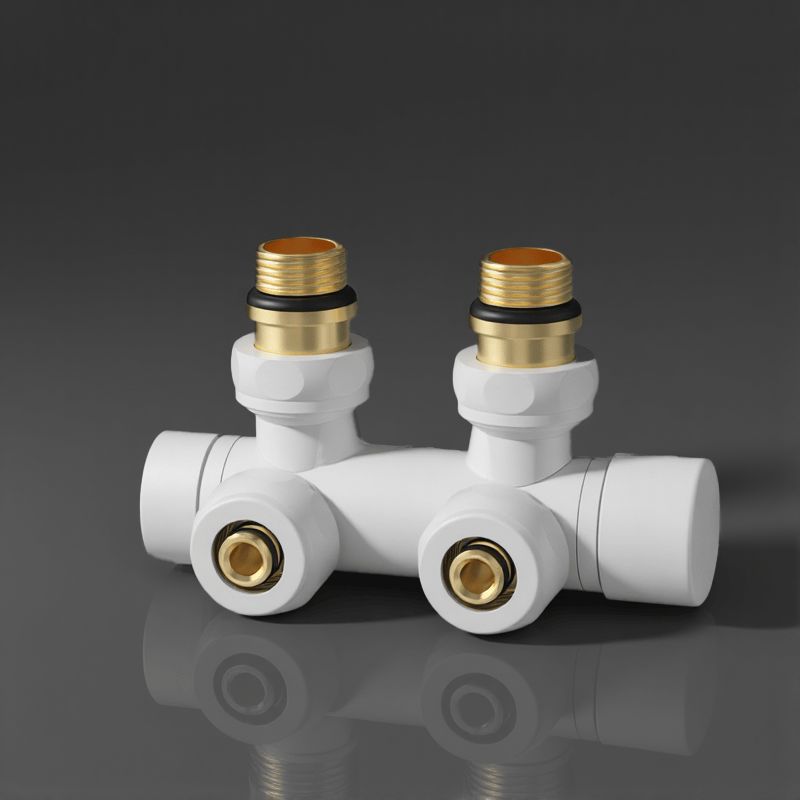
The durability of PEX fittings is also influenced by fitting material composition. Brass PEX fittings provide excellent mechanical strength and are compatible with both potable water and heating applications. Polymer-bodied PEX fittings offer corrosion-free performance throughout and are preferred in highly acidic or chemically aggressive water conditions. Selecting the correct PEX fittings variant for the specific application environment is essential to achieving maximum service life.
Installation Quality and System Integration
The long-term durability of PEX fittings depends significantly on proper installation technique. PEX fittings installed with correctly sized tools and within manufacturer-specified temperature and pressure ratings will perform reliably for the full rated service life. Incorrect crimping, improper pipe insertion depth, or use of incompatible tools are the most common causes of premature PEX fittings failure — factors entirely within the control of a trained installer.
System design also plays a role in how well PEX fittings perform over time. Multi-zone manifold systems that use PEX fittings throughout benefit from balanced flow distribution and reduced joint counts compared to traditional branching systems. Fewer connections mean fewer potential failure points, further enhancing the overall durability profile of installations built around PEX fittings.
FAQ
How long do PEX fittings typically last in a plumbing system?
PEX fittings are generally rated for 25 or more years of service under standard residential operating conditions. High-quality PEX fittings used in correctly designed and properly installed systems frequently exceed this rating, particularly when water chemistry and operating pressures remain within recommended limits.
Are PEX fittings suitable for both hot and cold water applications?
Yes, PEX fittings are specifically engineered to handle both hot and cold water service. They maintain their mechanical properties across a broad temperature range, making PEX fittings appropriate for domestic hot water distribution, radiant floor heating, and cold water supply lines within a single integrated system.
Do PEX fittings require special tools for installation?
PEX fittings require connection-method-specific tools such as crimp tools, clamp tools, or expansion tools depending on the fitting type. Using the correct, calibrated tool is essential because improper installation is the primary risk factor for PEX fittings failure. Most professional installers find PEX fittings faster and easier to work with than soldered copper or solvent-welded CPVC systems.