
 EN
EN



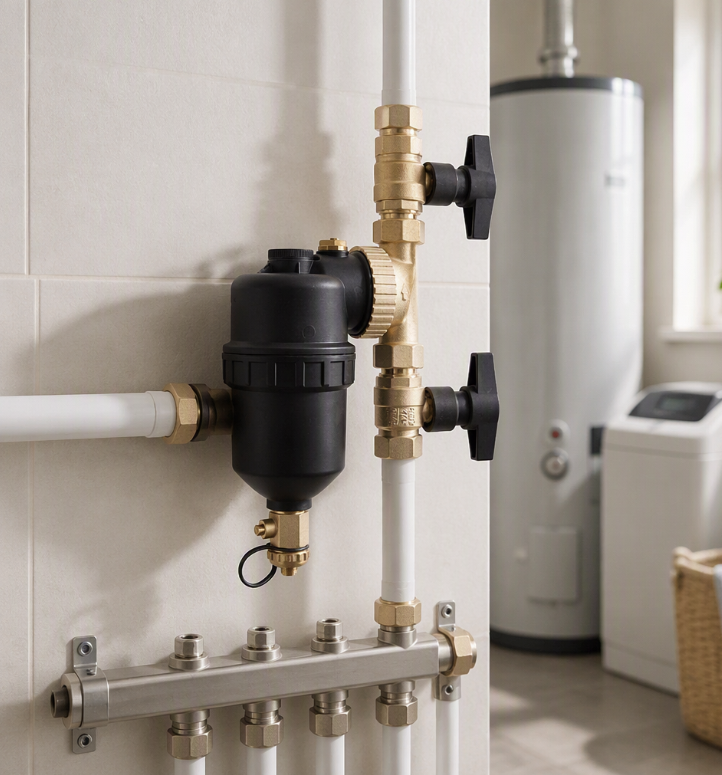
Your heating system has a hidden enemy. It’s black, gritty, and builds up silently inside pipes and radiators over years. By the time you notice cold spots, a noisy boiler, or rising bills, damage may already be done.
That enemy is magnetite. The simplest way to stop it is a boiler magnetic filter.
We spoke to heating engineers and pulled data from manufacturer specs to bring you this straight guide.
What Is a Boiler Magnetic Filter?
A boiler magnetic filter fits on your heating system’s return pipe—the pipe carrying water back to the boiler. Its job: capture magnetic debris before it reaches your boiler.
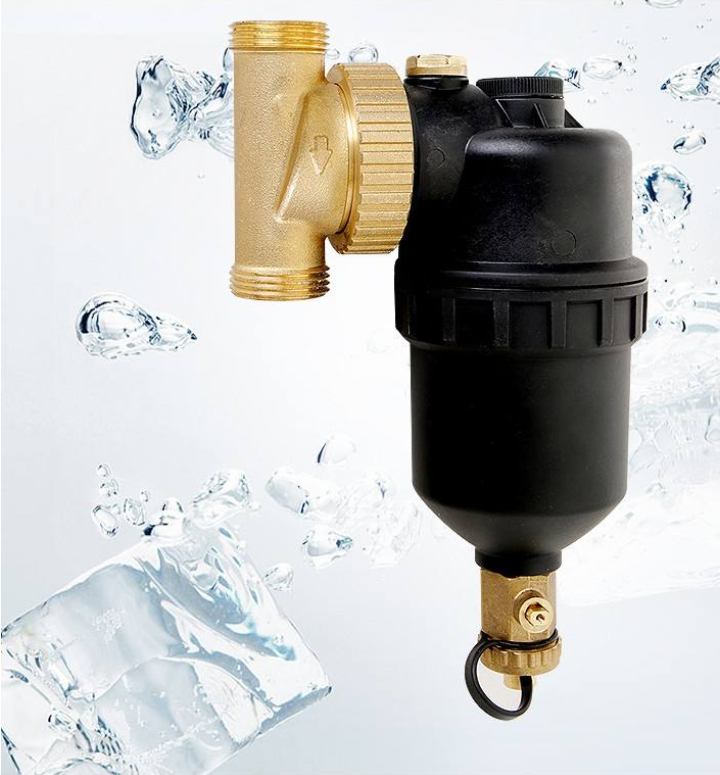
Inside is a strong magnet. As water flows through, the magnet grabs iron and steel particles—byproducts of corrosion inside steel radiators. Left unchecked, these mix with other debris and turn into thick black sludge that blocks radiators, clogs pumps, and wears out your boiler’s heat exchanger.
You’ll hear other names: central heating filter, MagnaClean. But the principle is the same: magnetic separation plus mechanical filtration for magnetite sludge removal.
How It Works: Three Principles
According to Caleffi’s technical documentation, a boiler magnetic filter uses three mechanisms:
Mechanical filtration. A steel mesh captures larger non-magnetic impurities.
Magnetic separation. The internal magnet holds ferrous particles—the core of magnetite sludge removal.
Settling chamber. A calm zone lets dirt settle, even if it isn’t magnetic.
That third part matters. Some debris is non-magnetic—limescale, copper, sealant. A central heating filter that only relies on magnetism will miss those. A well-designed boiler magnetic filter combines all three for complete heating system protection.
Avonflow’s Avonflow magnetic filter range uses a brass body with PA6-GF30 polymer housing and delivers 9,000 to 12,000 Gauss. The AFM-07 has 530ml capacity and handles up to 120°C and 12 BAR.
Why You Need One
The Cost of Doing Nothing
Sludge circulates. Every boiler firing moves contaminated water through the heat exchanger, pump, and narrow radiator channels. Over time, magnetite builds up. Your boiler works harder. Radiators get cold patches. Bills creep up. Without a boiler magnetic filter, this accelerates yearly.
Baxi, a leading UK boiler manufacturer, states many breakdowns are caused by sludge. Their data shows a central heating filter can cut energy bills by up to £80 per year, reduce carbon emissions by 7%, and increase radiator heat output by up to 47%. Crucially, boiler warranties do not cover sludge damage—making heating system protection essential.
What Homeowners Say
On UK trade forums, feedback is positive. One PistonHeads user reported: “We have a Magniflow, seems to work well. First clean I wiped quite a bit off. Fitted about 5 years, now hardly anything on it.”
Another said: “Definitely fit one. They cost pennies and work a treat. Even on recent boiler changes that were thoroughly power flushed, we still find considerable debris on the magnet after a year.”
Even new systems generate iron oxide as components bed in. A boiler magnetic filter isn’t just for old systems—it’s preventative heating system protection.
Installation and Maintenance
Where It Goes
The boiler magnetic filter installs on the return line, close to the boiler. This captures debris before it re-enters the heat exchanger. Most units mount vertically with the bowl downward for draining during cleaning.
Installation requires draining pipework, cutting the pipe, and fitting the central heating filter between two connections. A heating engineer can complete it in one to two hours.
What It Costs
Filter unit: £60–£150
Professional installation: £90–£250
Total installed: Typically £100–£200
If you’re having a new boiler installed, the boiler magnetic filter is often included—many manufacturers require it for warranty.
Maintenance
Cleaning a central heating filter takes five minutes. Close isolation valves, unscrew the canister, slide out the magnetic cartridge, and wipe it clean. The sludge adheres to the magnet, so a cloth is enough.
Clean annually during your boiler service. On heavily contaminated systems, check every three to four months until water runs clear. Regular cleaning ensures ongoing magnetite sludge removal and long-term heating system protection.
Who Benefits Most?
New Boiler Installations
Fit a boiler magnetic filter from day one. Worcester Bosch, Vaillant, Baxi, and Ideal now recommend or require a compatible central heating filter to maintain warranty validity. It’s cheap insurance for expensive equipment.
Older Systems with Sludge
A boiler magnetic filter won’t clean a heavily contaminated system. As Viessmann UK notes: “If your heating system is heavily blocked by sludge, fitting a magnetic filter won’t be enough to clean it.” You need a power flush first, then a central heating filter to keep it clean.
Landlords and Property Managers
For rentals, a boiler magnetic filter reduces emergency call-outs and extends heating system life. Fewer breakdowns mean fewer tenant complaints and lower maintenance costs. It’s heating system protection that pays for itself.
What to Look For
Not all filters are equal. For effective magnetite sludge removal and heating system protection:
Magnetic strength. 9,000 Gauss or higher for domestic systems. Avonflow’s range goes up to 12,000 Gauss.
Dual filtration. Best boiler magnetic filters combine magnetic capture with mechanical mesh filtration.
Build quality. Brass bodies resist corrosion better than plastic. Avonflow’s Avonflow magnetic filter uses brass with PA6-GF30 housing.
Ease of cleaning. Look for isolation valves and a removable magnetic cartridge.
Warranty. Quality central heating filters come with 10-year warranties.
FAQ
Do I need a boiler magnetic filter if my system is new?
Yes. Even new systems generate iron oxide as components bed in. Fitting a boiler magnetic filter from the outset prevents particles accumulating in the heat exchanger or pump.
How often should I clean it?
Annually during boiler service. On systems with significant sludge, check every three to four months until water runs clear. Regular cleaning maintains magnetite sludge removal.
Can I install it myself?
It requires draining pipework and cutting into the heating circuit. Unless confident, use a qualified engineer.
Will it fix my cold radiators?
No. If radiators have cold patches from sludge, you need a power flush first. A central heating filter prevents future problems—it doesn’t fix existing ones.
Is a boiler magnetic filter mandatory?
In England, Part L of Building Regulations (updated 2022) requires a magnetic filter on boiler replacement or new installation. Even where not mandatory, it’s best practice under BS 7593:2019 for heating system protection.
What’s the difference between a magnetic filter and a power flush?
A power flush removes existing sludge using high-pressure water and chemicals. A boiler magnetic filter prevents new sludge from reaching the boiler. You often need both—flush first, then filter.