
 EN
EN



When you're specifying heating for a new build or planning a renovation, the radiator itself tends to get all the attention. But here's what experienced installers and heating engineers know: the valve at the bottom of that radiator has a bigger impact on your energy bills and day-to-day comfort than almost any other heating decision you'll make.
The choice comes down to two options: manual valves (the simple on/off kind) or thermostatic radiator valves (TRVs), which automatically adjust water flow to maintain a set room temperature. Most homes in the UK and Europe still have manual valves on at least some radiators—but that's changing fast.
So which should you install? We spoke to installers, dug into user experiences from Reddit and homeowner forums, and pulled data from the Energy Saving Trust to bring you an honest comparison. Whether you're a first-time buyer, a family with young children, or someone renovating a period property, this guide will help you make the right call.
How Manual and Thermostatic Valves Actually Differ
Manual Valves: Simple, Cheap, and Easy to Forget
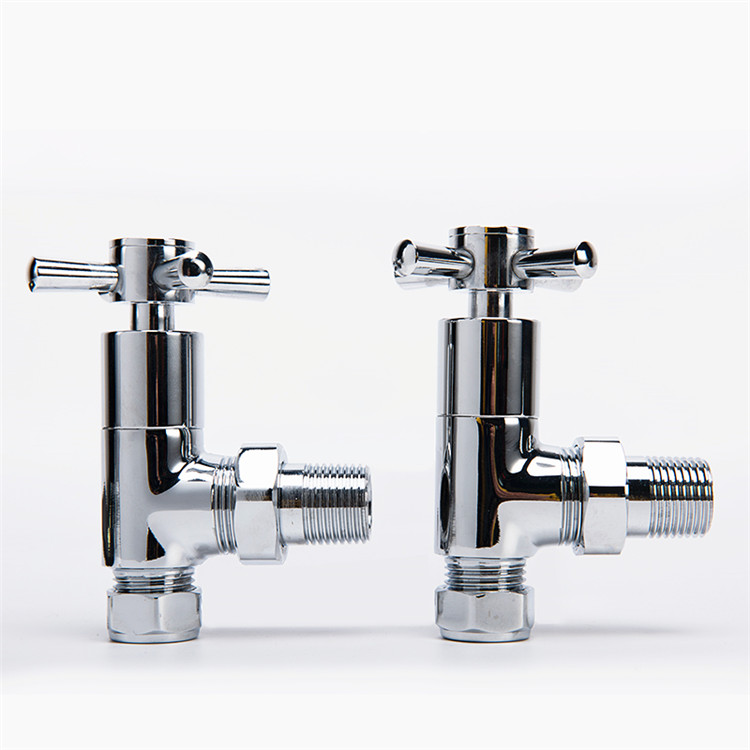
Manual valves work exactly like a tap. You twist the dial to open or close the flow of hot water. There's no temperature sensing, no automatic adjustment—just on or off.
The advantage is obvious: they're inexpensive. A pair of manual valves typically costs £10–£30, compared to £15–£40 for a basic TRV. For a single radiator in a rarely used box room, that price difference might matter.
But the downside catches up with you. Manual valves rely entirely on you remembering to adjust them. Leave a radiator fully open in an empty room and you're heating space nobody's using. As BestHeating puts it: "They're a bit like leaving a light on all day—you only save cash if you remember to turn it off".
Thermostatic Radiator Valves (TRVs): Automatic, Room-by-Room Control
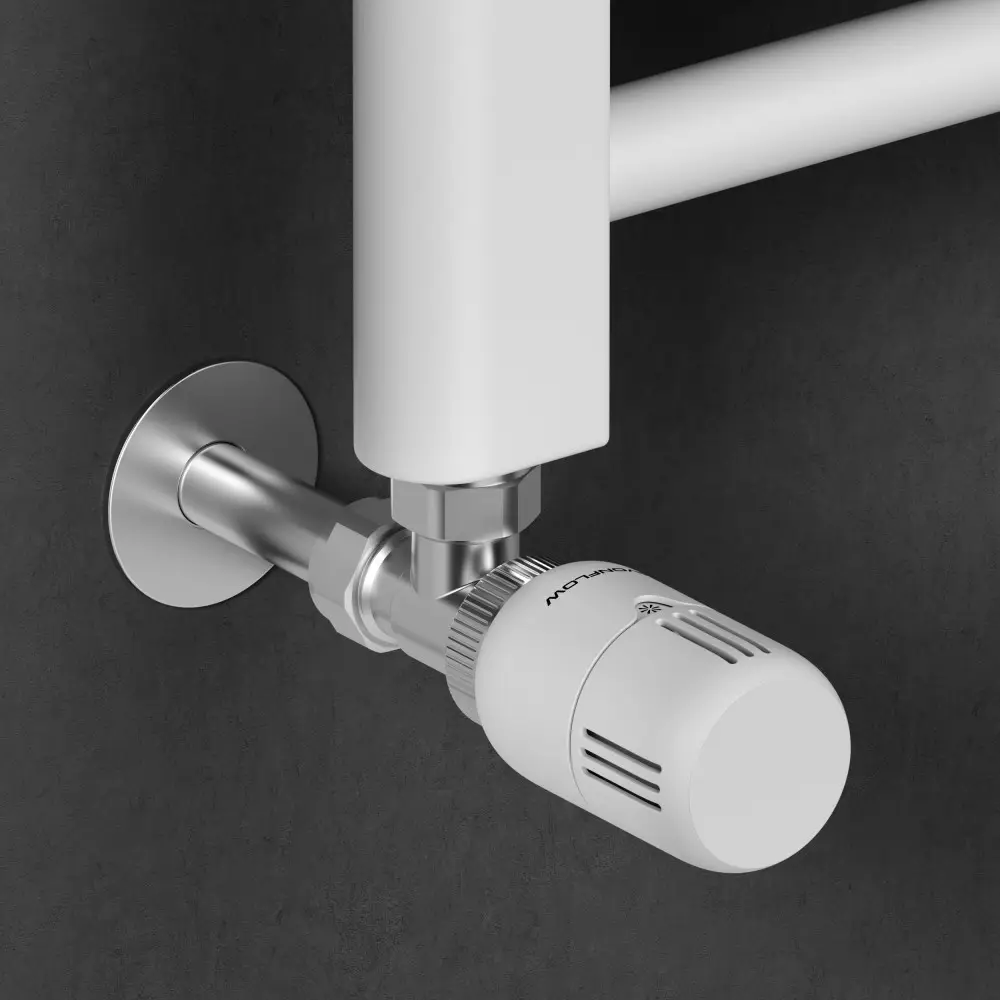
A TRV contains a sensor (typically a liquid-filled capsule or wax element) that responds to the air temperature around it. When the room reaches your set temperature, the valve automatically reduces or stops the hot water flow. When the room cools, it opens again.
This means every room can maintain its own temperature—independent of what's happening elsewhere in the house. You're not heating bedrooms to living-room temperatures, and you're not wasting energy on rooms nobody's using.
Reddit user Protoncek on the Home Assistant Community shared their experience after installing smart TRVs: "All my radiators now heat max. 50% of the time, so this means that without these valves they heated too much. I've had too warm in some rooms and now I'd save some heating money. My room temperature is constantly accurate within half a degree from what I set".
That's the real-world difference: precision control you don't have to think about.
The Financial Case: What You Actually Save
The Numbers
The Energy Saving Trust estimates that installing TRVs and using them alongside a main thermostat could save up to £75 per year for a typical UK household. British Gas puts the figure at £75 annually for a home with TRVs fitted on all radiators.
More aggressive estimates exist. Some studies suggest savings of 10–20% on annual heating bills, with an average of around 17%. A study by Pegler Terrier found that a typical gas boiler uses around 18% less energy over an average UK heating season when TRVs are used.
The variation depends on your home's insulation, how you currently use your heating, and how many rooms you're actually heating versus how many you're paying to heat.
Payback Period
Here's the good news: the investment pays for itself relatively quickly. eu.bac research shows that the average payback time on thermostatic radiator valves—including installation costs—is just two years. A US demonstration project found an average simple payback of 3.1 years based on an installed price of $50 per TRV.
For a homeowner planning to stay in their property for more than a couple of years, TRVs are one of the lowest-cost, highest-return energy upgrades available.
A Note for Renovators and New Builds
If you're already installing new radiators, the incremental cost of choosing TRVs over manual valves is minimal—often just a few pounds per radiator. And since UK Building Regulations Part L requires TRVs (or equivalent zone control) in all rooms except those with a room thermostat, you'll likely need them anyway to comply.
Avonflow's TRV TRCD39, for example, is rated TELL A according to the Classification Scheme for Energy Efficiency Labelling, with a temperature setting range of 6°C to 28°C and an anti-frost setting. For installers specifying heating systems for new builds, that certification provides confidence that the valve meets European energy efficiency standards.
Matching the Solution to Your Household
For Working Professionals: The "Set It and Forget It" Approach
If you're out of the house from 9 to 5, the last thing you want is to come home to a cold house—or to pay for heating an empty one all day. This is where TRVs (and especially smart TRVs) shine.
Recommended setup:
Living room: TRV set to position 3 (approximately 20°C). Program it to reduce temperature during work hours and warm up an hour before you return.
Bedroom: TRV set to position 2 (approximately 16°C) during the day, position 3 for the hour before bedtime.
Home office: If you work from home even one day a week, a smart TRV that lets you boost just that room is invaluable.
Spare room: TRV set to the frost protection symbol (approximately 8°C)—enough to prevent damp and frozen pipes, without wasting heat on a room nobody's in.
Reddit user Elsmandino from the Home Assistant Community noted that after switching to smart radiator actuators, they saved "about $40 per month in heating compared to the previous year".
For Families with Young Children and Elderly Relatives: Safety and Comfort First
Families have two distinct concerns that manual valves don't address well: consistent comfort (children and elderly relatives are more sensitive to temperature swings) and safety.
The safety issue. Exposed hot metal bars on radiators are a genuine burn risk for curious toddlers. This is one reason why bucket-style towel warmers have gained popularity among Reddit parents—the insulated exterior stays cool to the touch. The same principle applies to radiator valves: a TRV with a smooth, enclosed head is less likely to catch small hands or clothing than an exposed manual valve.
The comfort issue. Children's bedrooms need to stay within a comfortable range overnight—too warm and they're restless, too cold and they wake up. A TRV set to position 2 or 3 maintains that temperature automatically.
Recommended setup:
Children's bedrooms: TRV set to position 2–3 (16–20°C) at night, reduced during the day if the room isn't used.
Bathroom: TRV set to position 4 (approximately 24°C) for warmth when bathing, but consider a timer or smart control so it's not heating an empty room all day.
Living areas: Position 3 (20°C) as the baseline.
One radiator without a TRV: UK Building Regulations require one radiator (usually in the hallway or where the room thermostat is located) to remain without a TRV to provide a bypass for the boiler pump.
For elderly relatives living in the home, the priority shifts toward maintaining a consistent minimum temperature. TRVs with anti-frost settings and clear temperature markings are especially helpful.
For Renters and First-Time Buyers: Low-Commitment Upgrades
If you're renting, you probably can't replace the valve body. But many smart TRVs are designed to replace just the head of an existing thermostatic valve—no draining the system, no plumber required.
Recommended approach: Check whether your existing valves are already TRVs (they'll have a numbered dial rather than a simple on/off tap). If they are, a smart TRV head is a straightforward screw-on upgrade. If they're manual valves, talk to your landlord about the energy savings—TRVs are a selling point for rental properties.
What Installers Need to Know
Retrofit Compatibility
TRVs can be fitted to existing radiators with minimal fuss. The key considerations are:
Valve thread size: Most European radiators use M30 × 1.5mm thread, but older systems may need an adaptor.
Bypass requirement: One radiator must remain without a TRV, or an automatic bypass valve must be installed, to protect the boiler pump.
Sensor placement: Don't position the TRV where it's covered by curtains or furniture—the sensor needs to measure room air temperature, not the heat trapped behind a sofa.
Reliability: Manual vs. Thermostatic
This is a point of genuine debate among installers. Manual valves have fewer moving parts and are less likely to fail. Some heating engineers on DIY forums report that TRV pins can stick over time, particularly in hard water areas.
However, modern electronic TRV heads often include a weekly "exercise" function that moves the valve through its full range to prevent sticking. And when a TRV does fail, replacing the head is usually a five-minute job—no draining required.
On noise: manual TRVs are silent. Smart TRVs with motorised actuators can produce a faint mechanical sound when adjusting, though most users find it unobtrusive. As one Home Assistant user put it: "They are a little louder than I expected but for the two or three times a day that I hear them—they are not obtrusive".
The Avonflow Option
For installers and specifiers looking for a reliable TRV with proven performance, Avonflow's TRCD39 and TRCD07 models offer:
Liquid-filled sensor for accurate temperature response
Reversible bi-directional valve body for flexible installation
Rated flow of 173 kg/h and maximum flow temperature of 120°C
Fully tested to 10 BAR
These valves are suitable for both new installations and retrofit projects, and Avonflow provides OEM and ODM services for distributors and brand owners looking to private-label.
FAQ
Can I mix manual valves and TRVs in the same system?
Yes. In fact, you should. UK Building Regulations require at least one radiator without a TRV to provide a bypass path for the boiler pump. Most installers leave the hallway or bathroom radiator on a manual valve and fit TRVs everywhere else.
Do TRVs work with underfloor heating?
TRVs are designed for radiators, not underfloor heating. UFH systems use manifold mixing valves and zone controls instead. If you have a mixed system, keep TRVs on the radiators and leave the UFH on its own controls.
How long does it take to retrofit TRVs?
A competent DIYer can replace valve heads in about 15–20 minutes per radiator. Full valve body replacement (if you're upgrading from manual valves) requires draining the system and takes longer—budget 30–45 minutes per radiator for a professional installer.
Will TRVs save money if I already have a smart thermostat?
Yes, but the savings come from zone control, not from boiler modulation. A smart thermostat controls when the boiler fires; TRVs control where the heat goes. The combination is more effective than either alone.
What's the best TRV setting for a bedroom?
Position 2 (approximately 16°C) is comfortable for most people overnight. If you prefer a warmer bedroom, position 3 (20°C) is the upper end of the recommended range for sleeping.
Do I need a bypass valve if I fit TRVs?
If one radiator remains without a TRV, that radiator acts as the bypass. If all radiators have TRVs, you need an automatic bypass valve installed near the boiler. Your installer will advise on the correct setup for your system.