
 EN



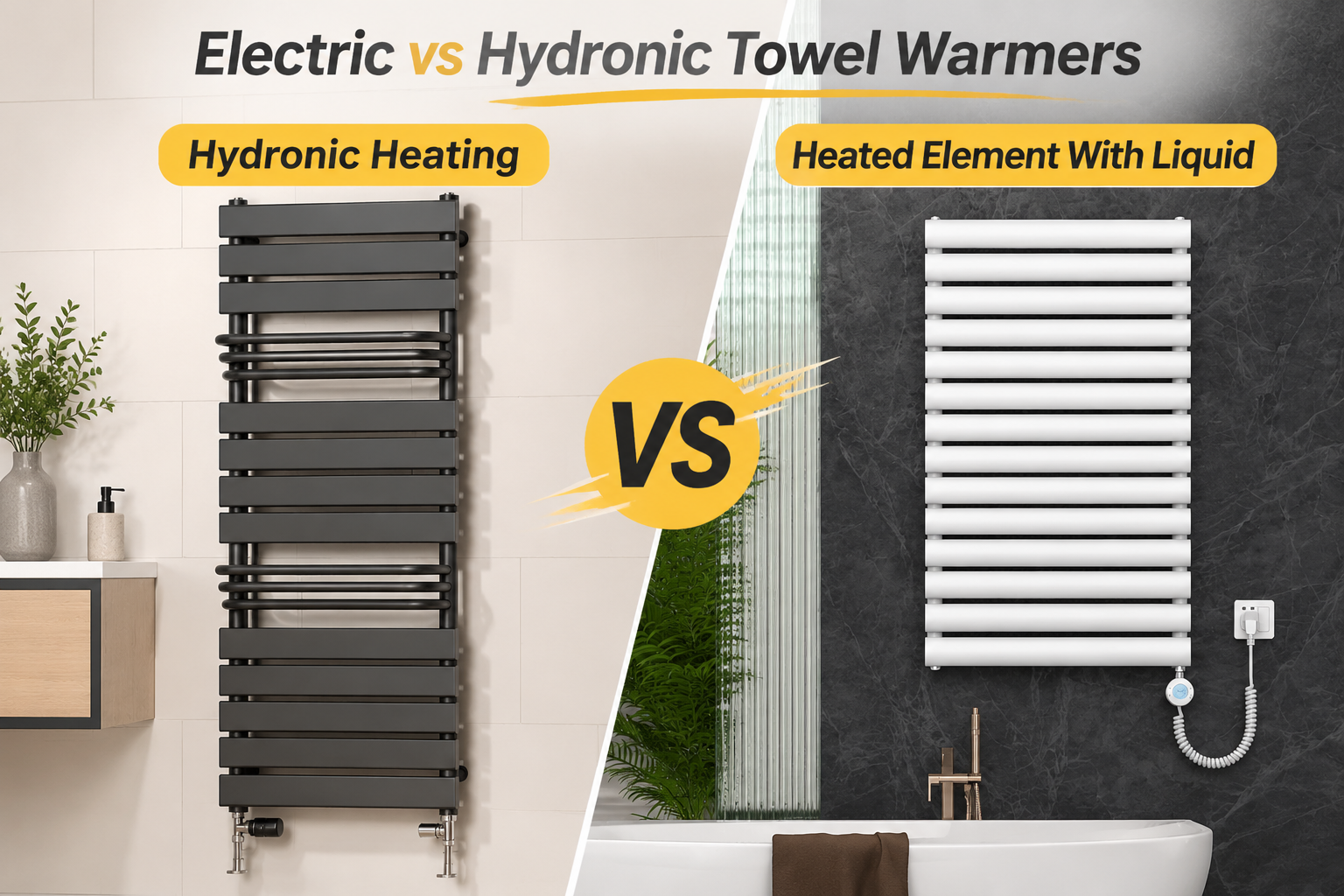
When choosing a heated towel rail for a bathroom, one of the first decisions is whether to choose an electric or hydronic model.
At first glance, they may look almost identical. Both are designed to warm towels, improve bathroom comfort and add practical functionality to the space. However, the way they generate and distribute heat is quite different.
An electric towel warmer uses electricity to produce heat, while a hydronic towel warmer relies on hot water circulating through a central heating system.
Understanding these differences can help homeowners, installers, distributors and project buyers choose the right product for different buildings and heating requirements.
In this guide, we'll explore how electric and hydronic towel warmers work, compare their installation requirements, heating performance, energy consumption and maintenance, and explain which option may be better suited to different applications.
What Is a Hydronic Towel Warmer?
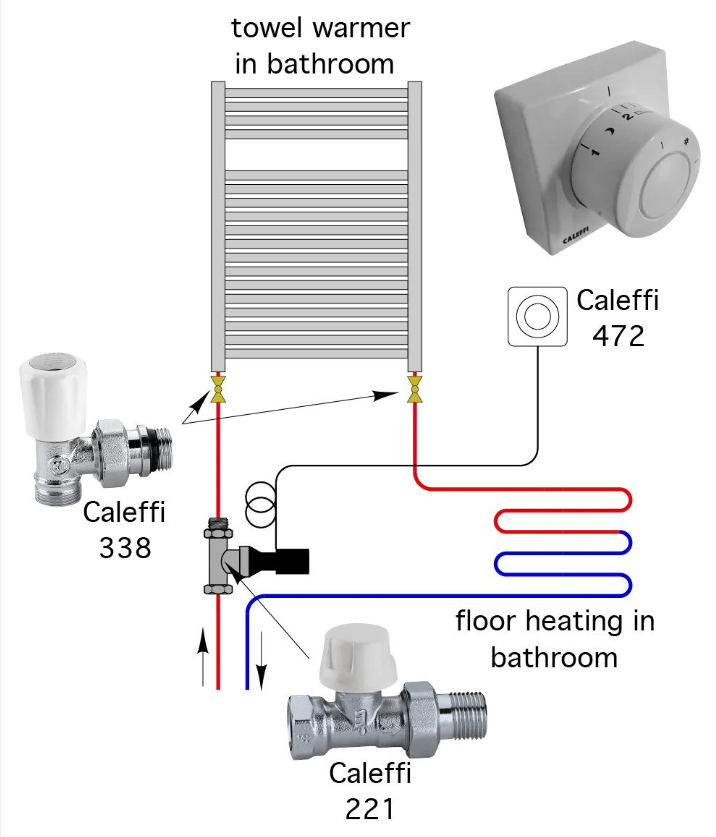
A hydronic towel warmer is connected to a building's central heating system. It uses hot water supplied by a boiler, heat pump or another compatible heating source to generate warmth.
Unlike an electric model, a conventional hydronic towel warmer does not have its own electrical heating element.
How Does Hydronic Heating Work?
The heating process generally follows these steps:
A boiler or other heating source heats the water.
Hot water travels through the heating pipes and enters the towel warmer.
The water circulates through the internal channels of the radiator.
Heat transfers through the metal surface, warming the towels and surrounding air.
The cooler water returns to the heating system to be reheated.
In simple terms:
Central heating system → Hot water circulation → Heated towel rail → Heat transfer.
Because hydronic towel warmers are connected to the wider heating system, their operation usually depends on the central heating schedule and water temperature.
Key Features of Hydronic Towel Warmers
Integrate with existing central heating systems.
Do not normally require a separate electrical heating element.
Suitable for homes and buildings with compatible hot-water heating infrastructure.
Available in different sizes, designs and finishes.
Can be controlled using suitable radiator valves and central heating controls.
For properties that already have a central heating system, hydronic towel warmers can be a practical way to add bathroom heating and towel warming without introducing a separate electric heating circuit.
What Is an Electric Towel Warmer?
An electric towel warmer uses electricity as its primary heat source. It can operate independently of a household's central heating system.
There are two common types of electric towel warmers: liquid-filled models and dry-element models.
How Does a Liquid-Filled Electric Towel Warmer Work?
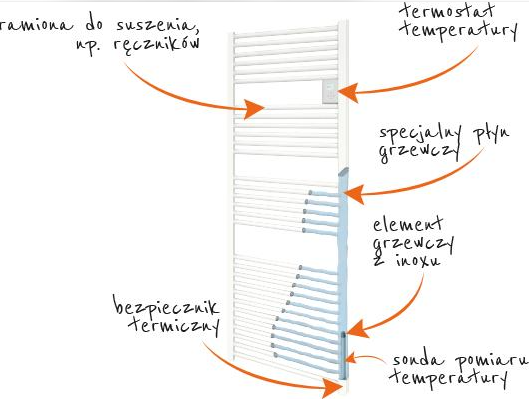
A liquid-filled electric towel warmer contains a heating element and a heat-transfer liquid inside its sealed structure.
Its working process is as follows:
Electricity powers the internal heating element.
The heating element converts electrical energy into heat.
Heat transfers to the liquid inside the towel warmer.
The warmed liquid distributes heat throughout the internal structure.
The metal surface becomes warm, helping heat and dry the towels.
The liquid acts as a heat-transfer medium. Depending on the product design, it may be a water-based fluid, a glycol-based mixture or another suitable thermal fluid.
Importantly, the liquid inside an electric towel warmer is not connected to the home's central heating water circuit.
How Does a Dry-Element Electric Towel Warmer Work?
Some electric towel warmers use a dry heating element instead of a liquid-filled system.
In these models, an internal electric heating element transfers heat directly to the metal structure.
The two electric designs have different internal constructions and thermal characteristics. Their warm-up times and heat distribution depend on factors such as element design, product size, materials and control settings.
Key Features of Electric Towel Warmers
Independent operation without central heating pipes.
Flexible installation options, subject to electrical requirements.
Suitable for year-round towel warming.
Can be equipped with thermostats, timers or other control options.
Available in different sizes, shapes and finishes.
One of the biggest advantages is independent operation. Homeowners can warm towels in summer without switching on the entire central heating system.
Electric vs Hydronic Towel Warmers: 8 Key Differences
Although both types provide warmth and help dry towels, their heating methods create several practical differences.
Heating Source
The most fundamental difference is where the heat comes from.
Electric towel warmers use an internal electrical heating element to generate heat. In liquid-filled models, the element heats the internal fluid before the warmth transfers to the metal surface.
Hydronic towel warmers receive heat from hot water circulating through the central heating system.
This difference affects installation, operation and the way each product fits into a building's existing heating infrastructure.
Installation Requirements
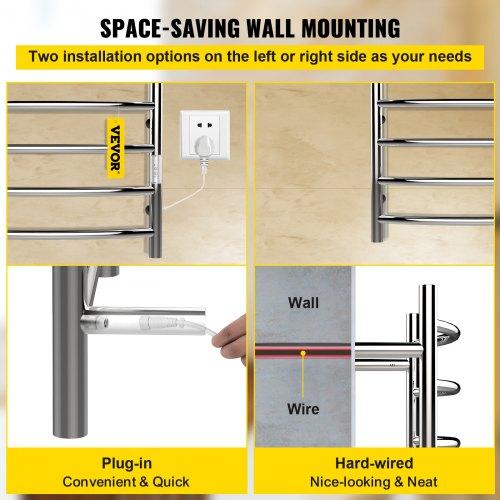
Electric towel warmers generally offer more flexibility when installing in existing bathrooms.
They do not require connections to central heating pipes, although they need an appropriate electrical connection. Depending on the model, this may involve a plug-in connection or fixed wiring.
Hydronic towel warmers require connections to the heating pipework, including suitable flow and return connections. Installation may involve plumbing work, system compatibility checks and appropriate radiator valves.
For bathroom renovation projects where extending heating pipes would be difficult, electric models can be an attractive option.
For new-build properties or major renovations with planned central heating infrastructure, hydronic models can integrate naturally into the overall heating design.

Heating Performance and Warm-Up Time
Both electric and hydronic towel warmers can provide comfortable warmth, but their performance depends on different factors.
For electric models, important factors include:
Heating element power.
Product dimensions and construction.
Internal liquid volume, if applicable.
Thermostat settings.
Ambient room temperature.
For hydronic models, performance depends on:
Central heating water temperature.
Water circulation rate.
Heating system design.
Radiator dimensions and heat output.
Flow and return conditions.
Neither heating method is automatically faster in every situation.
For example, a liquid-filled electric model needs time to heat its internal fluid, while a hydronic model depends on the availability and temperature of the circulating hot water.
When comparing products, buyers should consider the specified heat output and warm-up performance rather than relying on the heating method alone.
Energy Consumption and Running Costs
Running costs are another important consideration.
Electric towel warmers consume electricity according to their rated power and actual operating time.
For example, consider an electric towel warmer rated at 150W and operated for four hours per day.
Daily energy consumption:
150W × 4 hours ÷ 1,000 = 0.6 kWh
Over 30 days:
0.6 kWh × 30 = 18 kWh
This is an illustrative calculation based on continuous operation at the rated power. Actual consumption may be lower when a thermostat cycles the heating element on and off.
Hydronic towel warmers do not normally consume energy directly to generate heat. Instead, they use heat supplied by the central heating system.
Their running costs depend on the heating source, fuel or electricity prices, boiler or heat pump efficiency, operating schedule and overall system demand.
If central heating is already operating, adding a hydronic towel warmer may fit naturally into the existing heating routine.
However, starting an entire central heating system just to warm one towel rail may not always be economical.
Therefore, it is not accurate to say that electric towel warmers are always cheaper or that hydronic models are always more energy-efficient.
The best choice depends on the building, energy tariffs, heating equipment and usage habits.
Temperature Control
Electric towel warmers can be equipped with independent thermostats, timers and, depending on the model, smart controls.
This allows users to schedule operation around their daily routines.
For example, a homeowner may set the towel warmer to operate before the morning shower and switch off automatically afterwards.
Hydronic towel warmers are generally controlled through radiator valves and the central heating system.
Thermostatic radiator valves can help regulate water flow according to the desired temperature, while the wider heating schedule determines when hot water is available.
Both systems can offer temperature control, but electric models generally provide more independent operation.
Year-Round Use
This is one of the most noticeable practical differences.
In many UK and European homes, central heating is used mainly during colder months.
During spring and summer, homeowners may switch off their central heating system. A conventional hydronic towel warmer will then generally stop producing heat unless the central system provides hot water independently.
An electric towel warmer can continue operating throughout the year without requiring the main heating system to be switched on.
This makes electric models particularly useful for:
Summer towel warming.
Bathrooms in apartments.
Guest bathrooms.
Hotels and serviced accommodation.
Homes where independent bathroom heating is preferred.
For users who want warm towels throughout the year, independent electric operation can be a significant advantage.
Maintenance and Reliability
Both types require appropriate installation and periodic inspection, but their maintenance requirements differ.
Electric towel warmers may require checks of the heating element, thermostat, electrical connections and overall product condition.
Liquid-filled models should remain sealed and should only be serviced according to the manufacturer's instructions.
Hydronic towel warmers may require attention to radiator valves, pipe connections, air accumulation and the wider central heating system.
Common issues can include trapped air, valve problems or leaks at connections.
For distributors and project buyers, product quality, component reliability, installation instructions and after-sales support are important considerations regardless of the heating type.
Installation Flexibility and Application
Electric towel warmers are particularly suitable for applications where independent operation and flexible installation are important.
Hydronic towel warmers are a natural choice for buildings with established central heating infrastructure.
The decision should consider more than the product itself. Existing pipework, electrical supply, building regulations, installation costs and user preferences all influence the final selection.
Electric vs Hydronic Towel Warmers: Comparison Table
| Feature | Electric Towel Warmer | Hydronic Towel Warmer |
|---|---|---|
| Heat source | Electricity | Central heating hot water |
| Heating method | Internal electric element | Hot water circulation |
| Central heating pipes | Not required | Required |
| Electrical connection | Required | Usually no separate electrical heating connection |
| Independent operation | Yes | Usually dependent on central heating |
| Summer operation | Yes | Depends on the heating system |
| Temperature control | Independent thermostat or timer, depending on model | Radiator valves and central controls |
| Installation | Electrical installation | Plumbing and heating installation |
| Running costs | Electricity consumption | Cost of heat supplied by the heating system |
| Typical applications | Renovations, apartments, hotels and independent bathroom heating | Homes and projects with compatible central heating |
What Is a Dual Fuel Towel Warmer?
There is another option worth considering: the dual fuel towel warmer.
A dual fuel towel warmer combines hydronic and electric heating capabilities.
It can operate through a central heating system during the colder months and use a compatible electric heating element when central heating is switched off.
For example:
Winter: The towel warmer uses hot water supplied by the central heating system.
Summer: The electric heating element provides independent towel warming.
This combination offers greater seasonal flexibility and can be attractive to homeowners who want to use their towel warmer throughout the year.
However, dual fuel products require compatible components, suitable installation arrangements and correct operating procedures. The electric and hydronic heating systems must be installed and configured according to the manufacturer's instructions.
For distributors and bathroom brands, dual fuel towel warmers can also provide an additional product category for customers with different heating requirements.
Which Towel Warmer Is Right for Your Home or Project?
There is no single solution that works best for every building. The right choice depends on the existing heating infrastructure, installation conditions and intended use.
Electric Towel Warmers May Be Better Suited To:
Existing bathrooms where extending heating pipes is inconvenient.
Apartments without accessible central heating connections.
Homeowners who want independent bathroom heating.
Households that want to warm towels during summer.
Hotels and accommodation projects requiring independent operation in selected bathrooms.
Hydronic Towel Warmers May Be Better Suited To:
Homes with existing central heating systems.
New-build residential developments.
Major bathroom renovation projects.
Buildings where towel warmers can be integrated into the overall heating design.
Projects where a central heating solution is preferred.
What About Hotels and Commercial Projects?
For hotels, apartments, residential developments and other commercial projects, the decision requires a broader assessment.
Purchasing teams should consider:
Existing heating infrastructure.
Installation and renovation costs.
Expected operating hours.
Energy prices in the target market.
Maintenance arrangements.
Required product dimensions and heat output.
Temperature control requirements.
For larger projects, selecting the appropriate heating type at the design stage can help reduce installation complications and improve long-term usability.
What Should Buyers Consider When Sourcing Heated Towel Rails?
For importers, distributors, HVAC wholesalers and bathroom brands, choosing between electric and hydronic towel warmers is also a product portfolio decision.
Offering both heating options can help businesses serve customers with different installation environments and heating preferences.
When evaluating a manufacturer or supplier, consider the following:
Product Range
Does the supplier offer both electric and hydronic towel warmers? Are different sizes, configurations and finishes available?
Heating Components
For electric models, check the heating element, thermostat options, rated power, electrical specifications and applicable safety certifications.
For hydronic models, review the connection dimensions, operating pressure, heat output and compatibility with the intended heating system.
Quality and Compliance
Check product testing, relevant certifications, material quality and compliance requirements in the destination market.
Electrical products may be subject to additional safety and conformity requirements depending on the country and product configuration.
OEM & ODM Capabilities
For private-label brands and distributors, customization may include product dimensions, colours, finishes, heating components, controls, packaging and branding.
Delivery and After-Sales Support
Consistent production quality, reliable lead times, installation documentation and responsive technical support are important when building a long-term supply relationship.
Frequently Asked Questions
Q1. Is an electric towel warmer better than a hydronic towel warmer?
Neither is universally better. Electric towel warmers offer independent operation and flexible installation, while hydronic models integrate with existing central heating systems.
The best option depends on the building's heating infrastructure, installation requirements and intended use.
Q2. Can I use an electric towel warmer in summer?
Yes. An independently powered electric towel warmer can operate without switching on the central heating system, making it suitable for year-round towel warming.
Q3. Does a liquid-filled electric towel warmer use water?
Some liquid-filled electric towel warmers use water-based heat-transfer fluids, while others use glycol-based mixtures or alternative thermal fluids.
The exact filling medium depends on the manufacturer's product design and specifications.
Q4. Does a hydronic towel warmer need electricity?
A conventional hydronic towel warmer does not normally require its own electrical heating element. It relies on hot water circulated through the central heating system.
However, the wider heating system may use electricity to operate pumps, boilers and controls.
Q5. Can I convert a hydronic towel warmer into an electric towel warmer?
Some compatible towel rails can be converted using an approved electric heating element.
However, not every hydronic model supports this conversion. Product compatibility, internal construction, pressure requirements, filling procedures and electrical safety must all be checked before conversion.
Q6. Can electric towel warmers heat a bathroom?
Electric towel warmers provide heat to their immediate surroundings, but their primary purpose is generally towel warming and supplementary bathroom heating.
Whether they can adequately heat an entire bathroom depends on their rated heat output, room size, insulation and other heat losses.
They should not automatically be considered a replacement for a dedicated room heating system.
Find the Right Heated Towel Warmer for Your Market
Electric and hydronic towel warmers serve different needs, and understanding their differences is essential when choosing products for residential, commercial and hospitality applications.
Electric models provide independent heating and greater flexibility for year-round use. Hydronic models integrate with central heating systems and are particularly suitable for buildings with existing hot-water heating infrastructure.
For distributors, importers, bathroom brands and project buyers, offering the right combination of products can help address a wider range of market requirements.
At AVONFLOW, we focus on the development and manufacturing of heated towel rails and radiators, supporting international customers with OEM and ODM solutions.
With over 20 years of industry experience, AVONFLOW works with global partners to provide product options for different market needs, project specifications and customer preferences.
Whether you are sourcing electric towel warmers, hydronic towel warmers or customized heated towel rail solutions, choosing an experienced manufacturing partner is an important step towards building a reliable product portfolio.
Looking for a heated towel rail manufacturer for your next project or product range?
Explore AVONFLOW's product range at www.avonflowcn.com or contact our team to discuss your OEM and ODM requirements.
Table of Contents
- What Is a Hydronic Towel Warmer?
- What Is an Electric Towel Warmer?
- Electric vs Hydronic Towel Warmers: 8 Key Differences
- Electric vs Hydronic Towel Warmers: Comparison Table
- What Is a Dual Fuel Towel Warmer?
- Which Towel Warmer Is Right for Your Home or Project?
- What Should Buyers Consider When Sourcing Heated Towel Rails?
-
Frequently Asked Questions
- Q1. Is an electric towel warmer better than a hydronic towel warmer?
- Q2. Can I use an electric towel warmer in summer?
- Q3. Does a liquid-filled electric towel warmer use water?
- Q4. Does a hydronic towel warmer need electricity?
- Q5. Can I convert a hydronic towel warmer into an electric towel warmer?
- Q6. Can electric towel warmers heat a bathroom?
- Find the Right Heated Towel Warmer for Your Market